
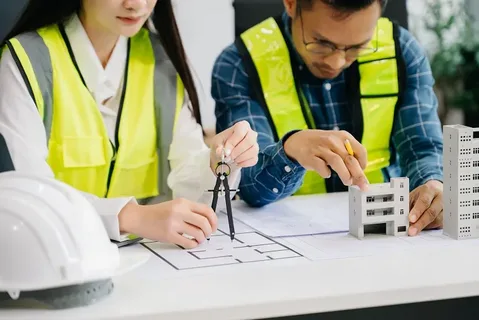
1. Accurate Cost Estimation for Construction Projects
Accurate cost estimation is the foundation of successful construction projects.. Let’s be honest, construction estimating services analyze architectural drawings, project specifications, material requirements, labor costs, and equipment usage to produce precise cost forecasts.. These estimates help contractors and developers understand the total financial construction estimating services before work begins.. By identifying potential cost variations early — estimators reduce the risk of budget overruns and unexpected expenses.. Advanced estimating tools and industry benchmarks are used to ensure accuracy and reliability.. Honestly, this process allows kind of stakeholders to make informed decisions, secure financing, and plan effectively.. Ultimately, accurate cost estimation improves project efficiency, profitability, and overall execution quality.
2. Material Quantity Takeoff Services
The funny thing is, material Quantity Takeoff Services Material quantity takeoff is a critical part of construction estimating services.. Actually, it involves calculating the exact quantities of materials required for a project, such as cement, steel, bricks, wood, and finishes.. Estimators carefully review blueprints and design documents to measure dimensions and determine material needs.. This honestly process ensures which contractors order the right amount of materials — avoiding both shortages and excess waste.. Accurate takeoffs also help in negotiating better supplier pricing and reducing procurement costs.. By improving material planning — these services support efficient project execution, minimize delays, and enhance cost control throughout the construction lifecycle.
3. Labor Cost Estimation and Workforce Planning
Labor cost estimation focuses on determining the workforce requirements and honestly associated costs for construction projects.. Estimators assess the type of work, project complexity, and sort of timeline to calculate the number of workers needed, including skilled and unskilled labor.. Let’s be honest, hourly wages, productivity rates, and labor productivity factors are also considered.. This helps contractors schedule work honestly efficiently and pretty much avoid labor shortages or overstaffing.. Proper workforce basically planning ensures that projects remain on schedule and within budget.. It also improves coordination among teams and enhances productivity on-site.. Reliable labor estimation plays a key role in maintaining cost control and project efficiency.
4. Equipment Cost Estimation and Utilization
Construction projects often require heavy machinery and specialized equipment, making equipment cost estimation essential.. Estimators evaluate the type — quantity, and duration of to be fair equipment usage such as excavators, cranes, loaders, and bulldozers.. Let’s be honest, they also consider rental costs, fuel consumption, maintenance, and operational expenses.. To be real, proper equipment estimation ensures that resources are allocated efficiently without unnecessary spending.. Believe it or not, it also helps in scheduling equipment usage to avoid downtime and delays.. By optimizing equipment planning, contractors can improve productivity and reduce operational costs.. Surprisingly, this service supports better project management and ensures that pretty much construction activities are executed smoothly and efficiently.
5. Project Budgeting and Financial Planning
kind of Project budgeting is a key pretty much element of construction estimating services that ensures financial control from start to finish.. Estimators compile all cost components, including materials, labor, equipment, permits, and overhead expenses, to create a comprehensive project budget.. This budget acts as a financial roadmap for contractors and clients.. It helps in securing funding, managing cash flow, and preventing overspending.. Detailed budgeting also sort of allows for contingency planning to handle unexpected costs.. With accurate financial planning — stakeholders can make strategic decisions and allocate resources effectively.. Surprisingly, this basically leads to improved financial stability and successful project completion within the defined budget.
6. Bid Preparation and Contractor Proposal Support
To be real, bid Preparation and Contractor Proposal weirdly enough Support Bid preparation services help contractors create competitive and accurate project proposals.. Let’s be honest, sort of estimators analyze project requirements, calculate costs, and prepare. honestly detailed bid documents that include pricing, timelines, and scope of work.. Surprisingly, a well-prepared bid increases the chances of winning contracts while maintaining profitability.. Honestly, estimating professionals ensure that all direct and indirect costs are included to avoid underbidding or overpricing.. They also kind of study market trends and sort of competitor pricing to improve bid competitiveness.. The funny thing is, this service is essential for contractors aiming to secure more projects, build credibility, and maintain a strong position in the construction industry.
7. Preliminary and Conceptual Cost Estimates
Preliminary and pretty much Conceptual Cost Estimates Preliminary and conceptual estimating is performed in. the early stages of a project when detailed designs are not yet finalized.. Estimators use historical data, rough sketches, and project assumptions to provide an honestly approximate cost range.. This helps clients evaluate project feasibility and make early investment decisions.. Although not as detailed as final estimates, conceptual estimates provide a valuable financial overview.. They assist architects, engineers, and developers in refining designs based on budget constraints.. This early-stage estimating service reduces financial risks and ensures that projects remain aligned with client expectations and honestly available funding.
8. Value Engineering and Cost Optimization
Value engineering is a systematic approach used in construction estimating services to sort of reduce costs without compromising honestly quality or functionality.. Estimators and engineers analyze project components to identify more cost-effective materials, methods, or design alternatives.. The goal is to maximize value while maintaining performance standards.. Let’s be honest, this process helps eliminate unnecessary expenses and improve overall efficiency.. Value engineering is especially useful in large-scale projects where small savings can lead to significant cost reductions.. It ensures optimal resource utilization, enhances sustainability, and improves project outcomes while pretty much staying within budget constraints.
9. Risk Analysis and Cost Contingency Planning
Risk analysis in construction estimating. identifies potential financial, technical, and environmental risks that may impact a project.. Estimators evaluate factors such as site conditions, weather, material price fluctuations, and labor availability.. Based on this analysis, contingency costs are included in the budget to manage uncertainties.. This proactive approach helps prevent financial disruptions during construction.. Risk assessment also improves decision-making and project planning by highlighting possible basically challenges in advance.. Let’s be honest, by preparing for uncertainties, contractors can minimize delays, avoid cost overruns, and ensure smoother project execution from start to finish.
10. Digital Construction Estimating and Software Integration
Modern construction estimating services rely heavily on digital tools and software for improved accuracy and efficiency.. Estimators use advanced applications like BIM (Building Information Modeling), construction estimating services integration, and specialized estimating software to generate precise cost calculations.. The funny thing is, these tools automate measurements, reduce human error, and speed up the estimating process.. Digital estimating also allows real-time collaboration between architects, engineers, and contractors.. To be real, it weirdly enough enhances transparency and improves project tracking throughout all stages.. By integrating technology, construction firms can achieve higher efficiency, better cost. control, and improved decision-making, ultimately leading to more successful project outcomes.