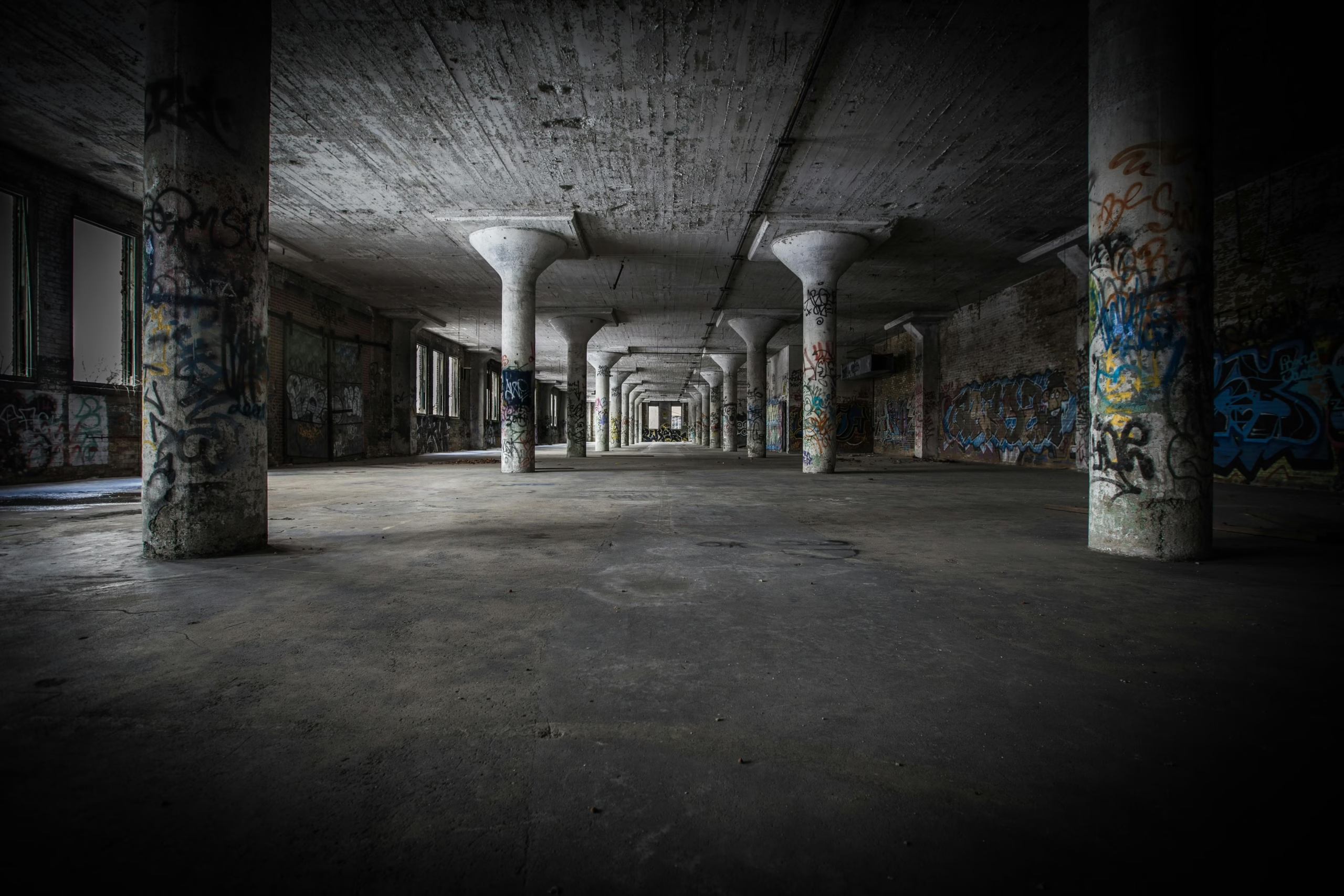
As the construction industry faces increasing pressure to reduce its environmental impact, concrete one of the most widely used building materials is under the spotlight. Traditional concrete production is responsible for nearly 8% of global CO₂ emissions. In response, low-carbon concrete mixes and sustainability certifications are reshaping how contractors estimate and specify concrete.
For estimators, this shift means adapting to new mix designs, tracking embodied carbon, and aligning with green building standards like LEED (Leadership in Energy and Environmental Design) and CSC (Concrete Sustainability Council). In this guide, we’ll explore how sustainable concrete estimating works, what factors to consider, and how to incorporate low-carbon strategies into your bids.
Key Estimating Factors for Sustainable Concrete
| Estimating Factor | Why It Matters for Sustainability | How to Account for It in Your Estimate |
|---|---|---|
| Low-Carbon Mix Selection | Reduces embodied carbon by replacing Portland cement | Specify SCMs (fly ash, slag, silica fume) and use EPDs for carbon data |
| Embodied Carbon Tracking | Required for LEED, CSC, and ESG reporting | Use carbon calculators (e.g., NRMCA tool) to quantify emissions |
| EPD Documentation | Environmental Product Declarations validate sustainability claims | Include EPDs from suppliers and link to mix designs |
| Green Certification Goals | Projects may target LEED, CSC, or other certifications | Align mix specs with certification criteria and point systems |
| Curing and Performance | Low-carbon mixes may affect strength gain and curing time | Adjust labor and schedule estimates accordingly |
| Material Sourcing | Local sourcing reduces transport emissions | Include supplier location and transport distance in carbon calculations |
| Cost Premiums | Sustainable mixes may cost more upfront | Include cost allowances and highlight long-term savings |
| Waste Reduction | Efficient batching and reuse reduce environmental impact | Estimate for optimized mix volumes and formwork reuse |
Sources: CSC Certification Guide, NRMCA Sustainability Resources
Estimating Tips for Low-Carbon Concrete Projects
1. Specify Supplementary Cementitious Materials (SCMs)
SCMs like fly ash, slag, and silica fume replace a portion of Portland cement, significantly reducing carbon emissions. Estimators should:
- Identify SCM availability in the project region
- Adjust mix designs based on strength and curing requirements
- Include supplier EPDs to validate sustainability claims
2. Use Carbon Calculators
Tools like the NRMCA Concrete Carbon Calculator help quantify the embodied carbon of your concrete mix. Include these metrics in your estimate to support LEED or ESG documentation.
3. Align with Certification Requirements
Projects targeting LEED or CSC certification must meet specific criteria for material sourcing, carbon reduction, and documentation. Estimators should:
- Review the certification checklist
- Include mix designs that contribute to point accumulation
- Document assumptions and exclusions clearly
4. Account for Performance Differences
Low-carbon mixes may cure more slowly or require different handling. Adjust your labor and schedule estimates to reflect:
- Extended curing time
- Modified formwork removal schedules
- Potential need for admixtures or curing compounds
5. Include Cost and Value Analysis
While sustainable mixes may carry a cost premium, they often result in long-term savings through:
- Reduced carbon taxes or offsets
- Enhanced building performance
- Improved marketability and compliance
Sustainable Concrete Estimating Checklist
- Specify SCMs and low-carbon mix designs
- Use EPDs from suppliers to validate carbon data
- Quantify embodied carbon using approved calculators
- Align mix specs with LEED, CSC, or ESG goals
- Adjust schedule and labor for curing performance
- Include transport emissions in material sourcing
- Document sustainability assumptions and exclusions
- Format estimate using CSI Division 03 standards
- Include cost premiums and long-term value analysis
- Collaborate with suppliers and sustainability consultants
Real-World Example: Estimating for a LEED-Certified Office Tower
A contractor bidding on a LEED Gold office tower in Austin:
- Specified a concrete mix with 30% fly ash and local aggregates
- Used EPDs from two suppliers and calculated embodied carbon with NRMCA tools
- Adjusted curing schedule to accommodate slower strength gain
- Included cost premiums and highlighted LEED point contributions
- Submitted a CSI-formatted estimate with full sustainability documentation
- Won the bid and helped the project achieve LEED Gold certification
Why Sustainable Estimating Matters
| Outcome | Benefit to Contractors |
|---|---|
| Improved Bid Competitiveness | Sustainability credentials help win public and ESG-driven projects |
| Reduced Environmental Impact | Low-carbon mixes cut emissions and support climate goals |
| Compliance with Certifications | Aligns with LEED, CSC, and ESG reporting requirements |
| Enhanced Client Trust | Transparent estimating builds credibility with owners and consultants |
| Long-Term Cost Savings | Sustainable materials often reduce lifecycle costs |
Final Thoughts
Sustainable concrete estimating is no longer optional it’s a strategic advantage. By incorporating low-carbon mixes, tracking embodied carbon, and aligning with green certifications, contractors can deliver smarter bids, reduce environmental impact, and meet the evolving demands of clients and regulators.
At MSB Estimating, we specialize in sustainable concrete estimating from LEED-certified towers to CSC-compliant infrastructure. Our team delivers CSI-formatted takeoffs, carbon tracking, and certification-ready documentation to help you win more work and build responsibly.
Ready to Estimate Sustainably?
Contact MSB Estimating today to integrate low-carbon strategies into your concrete bids.