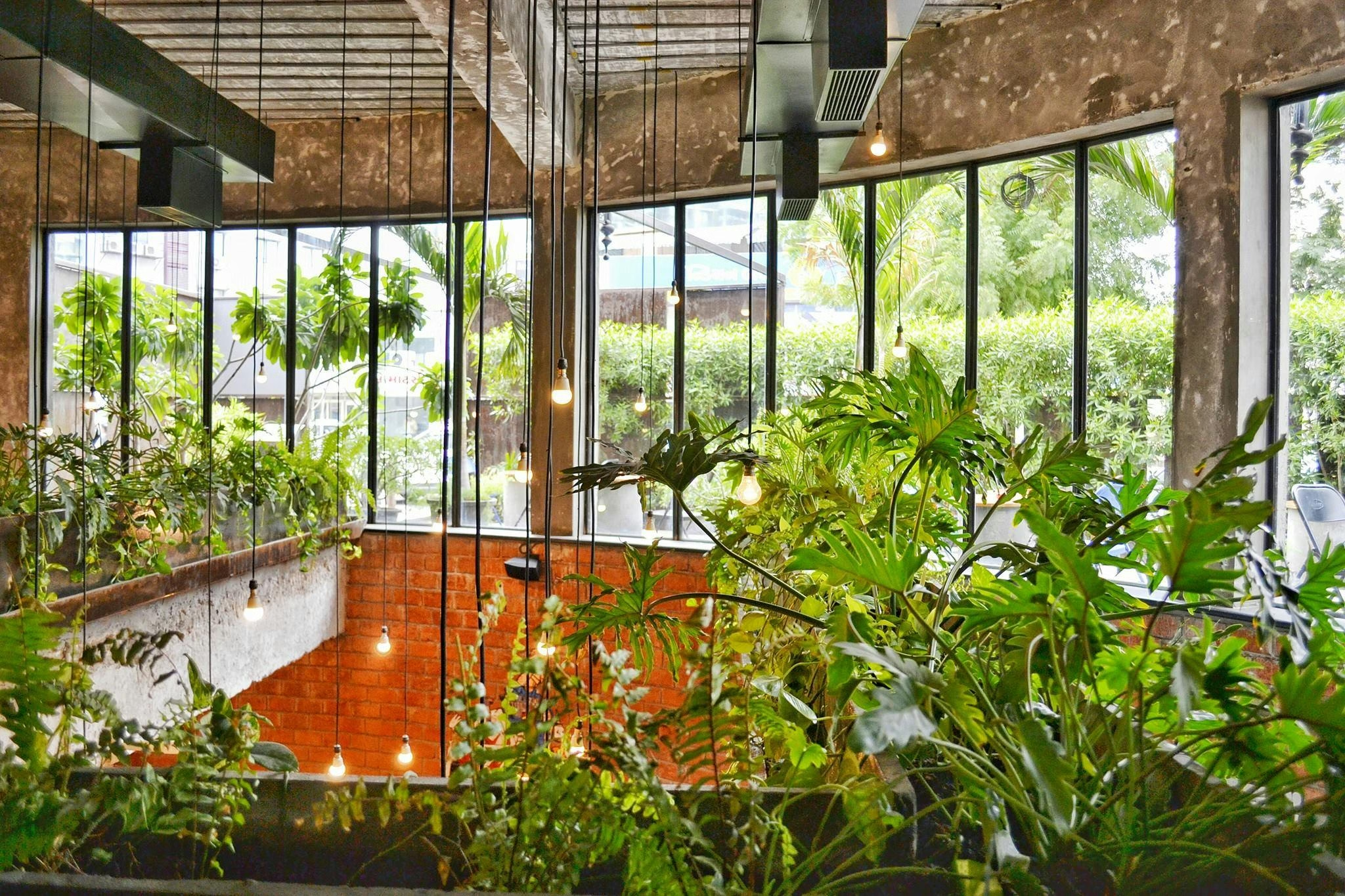
Connecticut has long been a leader in sustainable construction. With state-backed initiatives, municipal green building ordinances, and programs like the Connecticut Housing Finance Authority (CHFA) Energy & Sustainability Guidelines, the demand for LEED-certified and energy-efficient projects continues to grow.
Concrete, often seen as a high-carbon material, is undergoing a transformation. Through innovative mix designs, recycled content, and energy-efficient applications, it can play a central role in reducing a project’s environmental footprint. For contractors and estimators, this means adapting traditional estimating practices to account for sustainability requirements, documentation, and long-term performance.
This guide explores the unique challenges of estimating concrete for green building projects in Connecticut, with a detailed table of factors, step-by-step estimating strategies, and real-world examples.
Concrete Estimating Factors for LEED & Energy-Efficient Projects in Connecticut
| Factor | Green Building Challenge | Estimating Considerations |
|---|---|---|
| Mix Design | Reduce embodied carbon and improve durability | Specify SCMs (fly ash, slag), low-carbon cement, recycled aggregates |
| LEED Credits | Concrete contributes to Materials & Resources category | Document recycled content, regional sourcing, and EPDs |
| Energy Efficiency | Thermal mass improves building performance | Estimate insulated slabs, energy-efficient wall systems |
| Testing & Documentation | LEED and CHFA require proof of compliance | Add admin labor for EPDs, QC reports, and inspector sign-offs |
| Waste Management | Construction waste must be minimized | Include labor for recycling, separation, and disposal |
| Site Logistics | Urban sites require sustainable staging practices | Plan for reduced emissions equipment and efficient scheduling |
| Climate Considerations | Cold winters affect curing and energy performance | Budget for admixtures, heated enclosures, and extended curing |
| Client Expectations | Owners demand sustainability and certification | Provide mockups, samples, and maintenance allowances |
| Long-Term Durability | Sustainable concrete must perform over decades | Estimate resealing, crack repair, and lifecycle maintenance |
Step-by-Step Estimating Process
Step 1: Review LEED and CHFA Guidelines
-
- Identify which LEED credits the project is targeting (Materials & Resources, Energy & Atmosphere, Indoor Environmental Quality).
-
- Review CHFA’s Energy Conservation & Sustainability Guidelines for multifamily housing projects.
Step 2: Calculate Concrete Volume by Component
-
- Break down by foundations, slabs, walls, and decorative finishes.
-
- Include waste factors and allowances for recycling.
-
- Document assumptions for LEED compliance.
Step 3: Specify Sustainable Mix Designs
-
- Use supplementary cementitious materials (SCMs) like fly ash, slag, or silica fume.
-
- Incorporate recycled aggregates where permitted.
-
- Consider carbon-capture technologies or low-carbon cement alternatives.
Step 4: Account for Energy Efficiency
Concrete’s thermal mass can reduce heating and cooling loads. Estimators should:
-
- Include insulated slabs and wall systems.
-
- Factor in energy modeling requirements.
-
- Add costs for specialized formwork or insulation.
Step 5: Include Testing and Documentation Costs
-
- LEED and CHFA require Environmental Product Declarations (EPDs) and compliance reports.
-
- Add administrative labor for preparing submittals and coordinating with inspectors.
-
- Budget for third-party verification fees.
Step 6: Plan for Waste Management
-
- Include costs for sorting, recycling, and disposal of concrete waste.
-
- Document recycling rates to earn LEED credits.
-
- Add labor for on-site waste management practices.
Step 7: Factor in Climate Challenges
Connecticut’s winters can slow curing and affect energy performance. Estimators should:
-
- Budget for cold-weather admixtures.
-
- Include heated enclosures and extended curing schedules.
-
- Plan for seasonal scheduling to avoid peak freeze periods.
Step 8: Plan for Long-Term Durability
Green building is not just about initial performance it’s about lifecycle sustainability.
-
- Include allowances for resealing, crack repair, and periodic inspections.
-
- Document lifecycle cost savings for owners.
Estimator’s Checklist
-
- Review LEED and CHFA sustainability guidelines
-
- Calculate concrete volumes by structural element
-
- Specify low-carbon mixes with SCMs and recycled aggregates
-
- Document recycled content and regional sourcing for LEED credits
-
- Add administrative labor for compliance documentation
-
- Plan for waste management and recycling
-
- Budget for cold-weather curing and extended schedules
-
- Include lifecycle maintenance allowances
Real-World Example: Energy-Efficient Multifamily Housing in New Haven
A contractor bidding on a CHFA-funded housing project:
-
- Specified low-carbon concrete mix with 30% fly ash.
-
- Calculated 2,500 CY of concrete across foundations and slabs.
-
- Documented recycled aggregate content for LEED credits.
-
- Added $50,000 in compliance labor for EPDs and sustainability reports.
-
- Delivered a CSI-formatted estimate that met CHFA and LEED requirements.
-
- The project achieved LEED Silver certification and reduced embodied carbon by 18%.
Why Green Estimating Matters
| Outcome | Benefit to Contractors |
|---|---|
| LEED Certification | Accurate estimates help secure credits and certification |
| Reduced Carbon Footprint | Sustainable mixes lower embodied emissions |
| Energy Efficiency | Thermal mass improves building performance |
| Compliance Assurance | Proper documentation passes CHFA and LEED inspections |
| Competitive Advantage | Green bids win more projects in Connecticut’s sustainable market |
| Long-Term Durability | Sustainable concrete extends building life and reduces maintenance |
| Community Impact | Green projects enhance Connecticut’s environmental goals |
Final Thoughts
Estimating concrete for green building projects in Connecticut requires precision, sustainability awareness, and compliance with LEED and CHFA guidelines. By including low-carbon mixes, recycled materials, energy-efficient design, and thorough documentation, contractors can deliver bids that are competitive, compliant, and environmentally responsible.
At MSB Estimating, we specialize in sustainable concrete estimating for Connecticut projects. From multifamily housing to commercial LEED-certified buildings, we provide CSI-formatted takeoffs tailored to green building standards.
Need Help Estimating for Green Projects?
Contact MSB Estimating today to get accurate, sustainability-focused concrete estimates for your next Connecticut project.