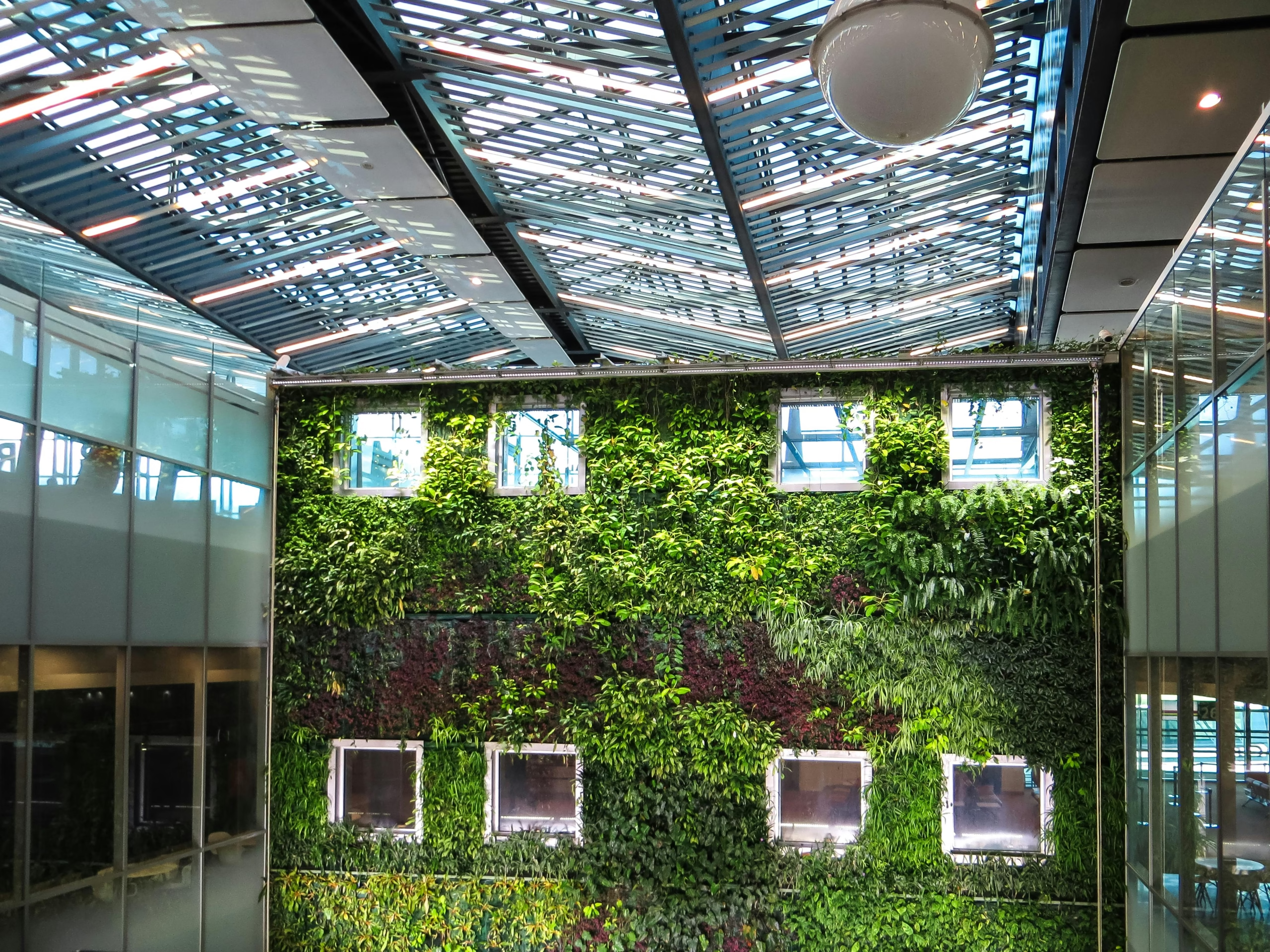
California has positioned itself as a global leader in sustainable construction. With ambitious climate policies, strict building codes, and widespread adoption of LEED (Leadership in Energy and Environmental Design) and Net-Zero standards, contractors and estimators face new challenges. Concrete, while essential for structural integrity, is also one of the largest contributors to embodied carbon in construction.
For projects pursuing LEED certification or Net-Zero performance, estimating concrete requires more than calculating cubic yards. It involves selecting low-carbon mixes, documenting Environmental Product Declarations (EPDs), sourcing recycled materials, and planning for long-term durability in California’s diverse climates from coastal humidity in San Diego to seismic zones in Los Angeles.
This guide explores how to estimate concrete for green building projects in California, explains the differences between LEED and Net-Zero requirements, and provides a detailed table of sustainability factors to include in your estimates.
Sustainable Concrete Estimating Factors for California Projects
| Factor | LEED Requirements | Net-Zero Considerations |
|---|---|---|
| Mix Design | Use SCMs (fly ash, slag, silica fume) to reduce cement | Incorporate carbon capture or CO₂-mineralized mixes |
| EPDs (Environmental Product Declarations) | Required for LEED v4 credits | Essential for tracking embodied carbon |
| Recycled Materials | Recycled aggregates, rebar, and formwork | Maximize reuse to reduce lifecycle emissions |
| Transportation Impact | Document supplier distance and fuel use | Optimize local sourcing to minimize emissions |
| Energy Efficiency | Credits for reduced construction energy use | Align with Net-Zero operational and embodied energy |
| Documentation | Submittals for LEED credits | Carbon accounting and lifecycle analysis reports |
| Curing Methods | Low-VOC curing compounds | Sustainable curing practices with minimal water waste |
| Client Expectations | LEED certification plaque and credits | Net-Zero performance guarantees |
Step-by-Step Estimating Process
Step 1: Define Sustainability Goals
Determine whether the project is targeting LEED Silver, Gold, or Platinum certification or full Net-Zero compliance. Each level requires different credits, documentation, and performance benchmarks.
Step 2: Select Sustainable Mix Designs
Concrete mix design is central to reducing embodied carbon.
-
- LEED Projects: Use supplementary cementitious materials (SCMs) such as fly ash, slag, or silica fume to replace a portion of Portland cement.
-
- Net-Zero Projects: Consider advanced technologies like CO₂-mineralized concrete or mixes with carbon capture additives.
Include costs for specialized admixtures and supplier certifications.
Step 3: Document EPDs and Material Sources
LEED v4 requires EPDs for concrete and rebar to earn credits. Net-Zero projects demand full lifecycle carbon accounting. Estimators must include:
-
- Costs for obtaining EPDs from suppliers
-
- Administrative labor for compiling documentation
-
- Coordination with sustainability consultants
Step 4: Account for Recycled and Local Materials
California’s green building codes encourage the use of recycled and regional materials. Include:
-
- Recycled aggregates for non-structural slabs
-
- Recycled steel reinforcement
-
- Reusable formwork systems
-
- Transportation costs based on supplier distance
Step 5: Include Sustainable Curing and Finishing
Traditional curing methods can waste water or introduce VOCs. Sustainable alternatives include:
-
- Low-VOC curing compounds
-
- Water-efficient curing systems (spray or misting)
-
- UV-resistant sealers for coastal projects
Step 6: Plan for Compliance and Documentation
Green building projects require extensive paperwork. Estimators should add:
-
- Labor for preparing LEED submittals
-
- Costs for carbon accounting software or consultants
-
- Coordination with inspectors and certification agencies
Green Concrete Estimating Checklist
-
- Identify project sustainability goals (LEED level or Net-Zero)
-
- Select low-carbon mix designs with SCMs or CO₂-mineralized concrete
-
- Document EPDs and supplier certifications
-
- Include recycled and locally sourced materials
-
- Estimate sustainable curing and finishing methods
-
- Add compliance labor for LEED and Net-Zero documentation
-
- Format estimate using CSI Division 03 standards
-
- Build contingency for certification reviews and re-submittals
Real-World Example: Estimating a LEED Platinum University Building in Los Angeles
A contractor bidding on a 200,000 sq ft academic building:
-
- Specified concrete with 40% slag replacement to reduce cement content
-
- Included EPD documentation for concrete, rebar, and aggregates
-
- Estimated recycled aggregate for walkways and non-structural slabs
-
- Added curing compound costs for low-VOC compliance
-
- Coordinated with sustainability consultants for carbon accounting
-
- Submitted a CSI-formatted estimate with LEED-specific line items
-
- Achieved LEED Platinum certification with a 35% reduction in embodied carbon
Why Sustainable Estimating Matters
| Outcome | Benefit to Contractors |
|---|---|
| Certification Success | Accurate estimates ensure LEED and Net-Zero compliance |
| Improved Profit Margins | Sustainable materials reduce lifecycle costs |
| Stronger Client Relationships | Green credentials build trust with owners and developers |
| Competitive Advantage | Sustainability-focused bids win more work in California’s market |
| Reduced Risk | Compliance protects against penalties and certification delays |
| Future-Proofing | Aligning with Net-Zero prepares contractors for upcoming regulations |
Final Thoughts
Estimating concrete for green building in California requires precision, sustainability awareness, and compliance with LEED and Net-Zero standards. By including low-carbon mixes, recycled materials, and documentation costs, contractors can deliver bids that are both competitive and environmentally responsible.
At MSB Estimating, we specialize in sustainable concrete estimating for California projects. From LEED-certified offices to Net-Zero residential developments, we provide CSI-formatted takeoffs and compliance-ready estimates tailored to green building standards.
Need Help Estimating for LEED or Net-Zero Projects?
Contact MSB Estimating today to get accurate, sustainability-focused concrete estimates for your next California project.