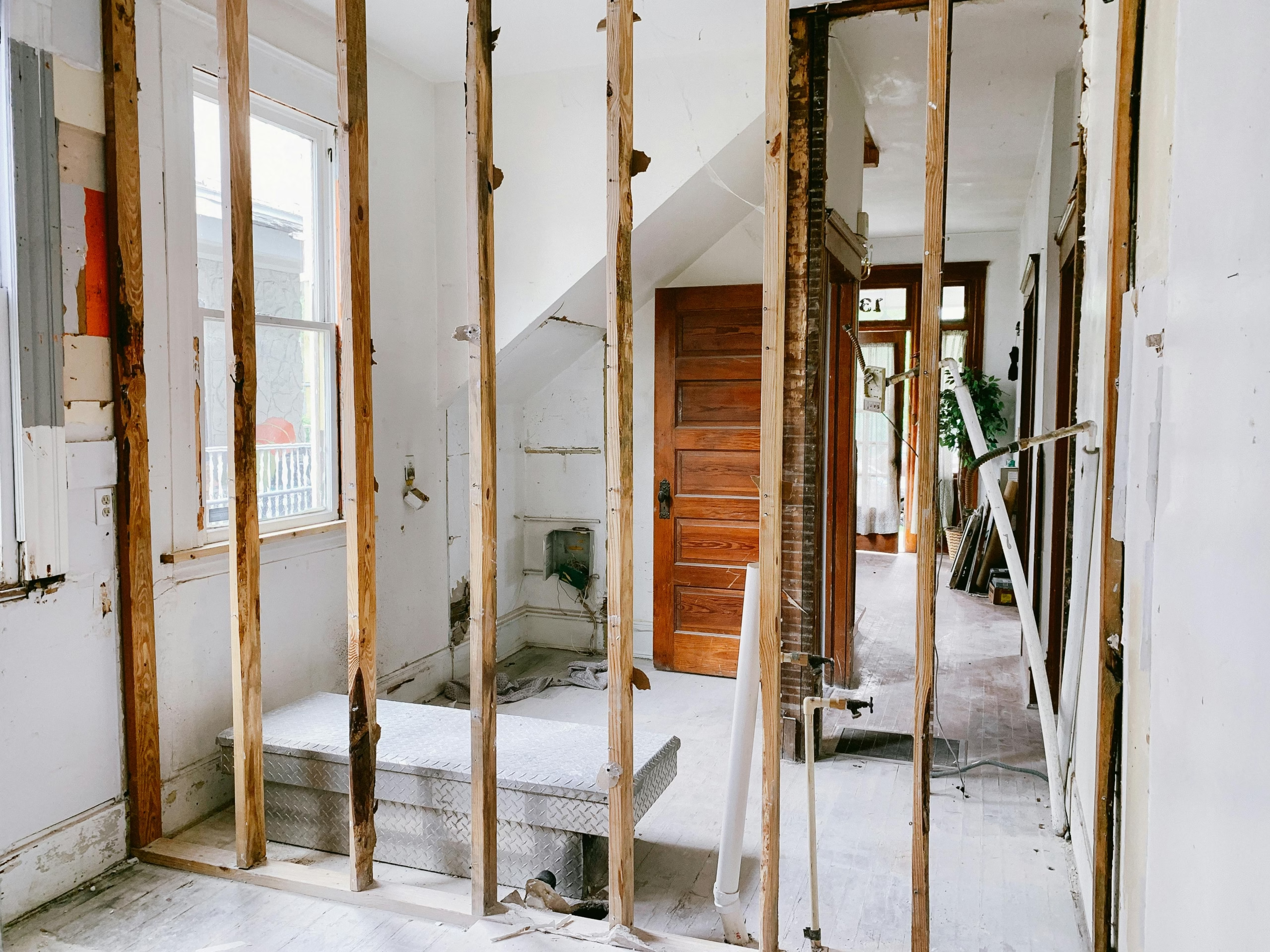
Wilmington, Delaware, is home to some of the state’s most iconic historic neighborhoods, where preservation is not just encouraged but mandated. The Delaware Historic Preservation Tax Credit Program has supported the rehabilitation of more than 300 properties statewide, including 124 in Wilmington, leveraging over $416 million in investment.
For contractors and estimators, working in these districts means balancing heritage preservation with modern construction standards. Unlike new builds, historic renovations require authentic materials, specialized craftsmanship, and strict adherence to city and state preservation guidelines. Accurate estimating ensures projects remain financially viable while honoring Wilmington’s architectural legacy.
Key Estimating Factors for Historic Renovations
| Factor | Challenge | Estimating Considerations |
|---|---|---|
| Authentic Materials | Original brick, stone, wood often costly or scarce | Budget for sourcing specialty suppliers and custom fabrication |
| Labor Expertise | Skilled artisans needed for restoration | Include premiums for masons, carpenters, and preservation specialists |
| Preservation Compliance | Must meet SHPO and city guidelines | Add administrative labor for permits, inspections, and documentation |
| Tax Credit Opportunities | Delaware offers credits up to 20–40% of qualified costs | Factor credits into final estimate to reduce net expenses |
| Modern Upgrades | Integrating HVAC, plumbing, and electrical systems | Estimate for concealed installations that preserve aesthetics |
| Extended Timelines | Historic work often slower due to detail | Add contingency for longer schedules and unforeseen issues |
| Site Logistics | Narrow streets and older structures complicate access | Budget for staging, scaffolding, and specialized equipment |
| Maintenance Forecasting | Historic buildings require ongoing care | Include resealing, tuckpointing, and periodic inspections |
Step-by-Step Estimating Process
- Survey the Building – Document existing conditions, structural integrity, and original materials.
- Identify Preservation Requirements – Review Wilmington’s Land Use & Planning guidelines and SHPO standards.
- Calculate Material Costs – Source authentic or reproduction materials; budget for higher procurement costs.
- Plan for Skilled Labor – Include artisans experienced in masonry, carpentry, and decorative finishes.
- Add Compliance Costs – Budget for permits, inspections, and documentation required by preservation boards.
- Factor in Tax Credits – Apply Delaware’s Historic Preservation Tax Credit Program to offset qualified expenses.
- Include Modern Systems – Estimate concealed installations for HVAC, plumbing, and electrical upgrades.
- Forecast Maintenance – Plan for long-term upkeep to preserve structural and aesthetic integrity.
Real-World Example: Market Street Renovation
A contractor restoring a 19th-century building on Market Street:
- Budgeted $150,000 for authentic brick and woodwork.
- Added $75,000 for skilled artisan labor.
- Included $20,000 in compliance costs for permits and inspections.
- Leveraged Delaware’s Historic Preservation Tax Credit, reducing net costs by 30%.
- Delivered a project that preserved historic character while integrating modern systems.
Why Accurate Estimating Matters
| Outcome | Benefit to Contractors |
|---|---|
| Financial Viability | Tax credits reduce net project costs |
| Compliance Assurance | Proper documentation passes SHPO and city inspections |
| Client Satisfaction | Preserves historic charm while adding modern comfort |
| Risk Reduction | Planning avoids delays and unforeseen expenses |
| Community Impact | Supports Wilmington’s revitalization and cultural heritage |
Additional Considerations
- Historic Preservation Tax Credit Program: Authorized through 2030, offering up to 40% credits on qualified rehabilitation costs.
- Urban Planning Integration: Wilmington’s Land Use & Planning Department ensures renovations align with broader city growth strategies.
- Hidden Costs: Older buildings often reveal structural damage, outdated wiring, or water intrusion, requiring contingency allowances.
- Cultural Value: Renovations contribute to Wilmington’s identity, attracting tourism, investment, and community pride.
Final Thoughts
Historic renovations in Wilmington’s preservation districts demand precision, respect for heritage, and financial foresight. By budgeting for authentic materials, skilled labor, compliance, and leveraging tax credits, contractors can deliver projects that honor the past while meeting modern needs.
At MSB Estimating, we specialize in historic renovation estimates across Delaware, helping contractors balance preservation requirements with profitability.
Need Help Estimating Historic Projects?
Contact MSB Estimating today for accurate, preservation-ready estimates tailored to Wilmington’s historic districts.