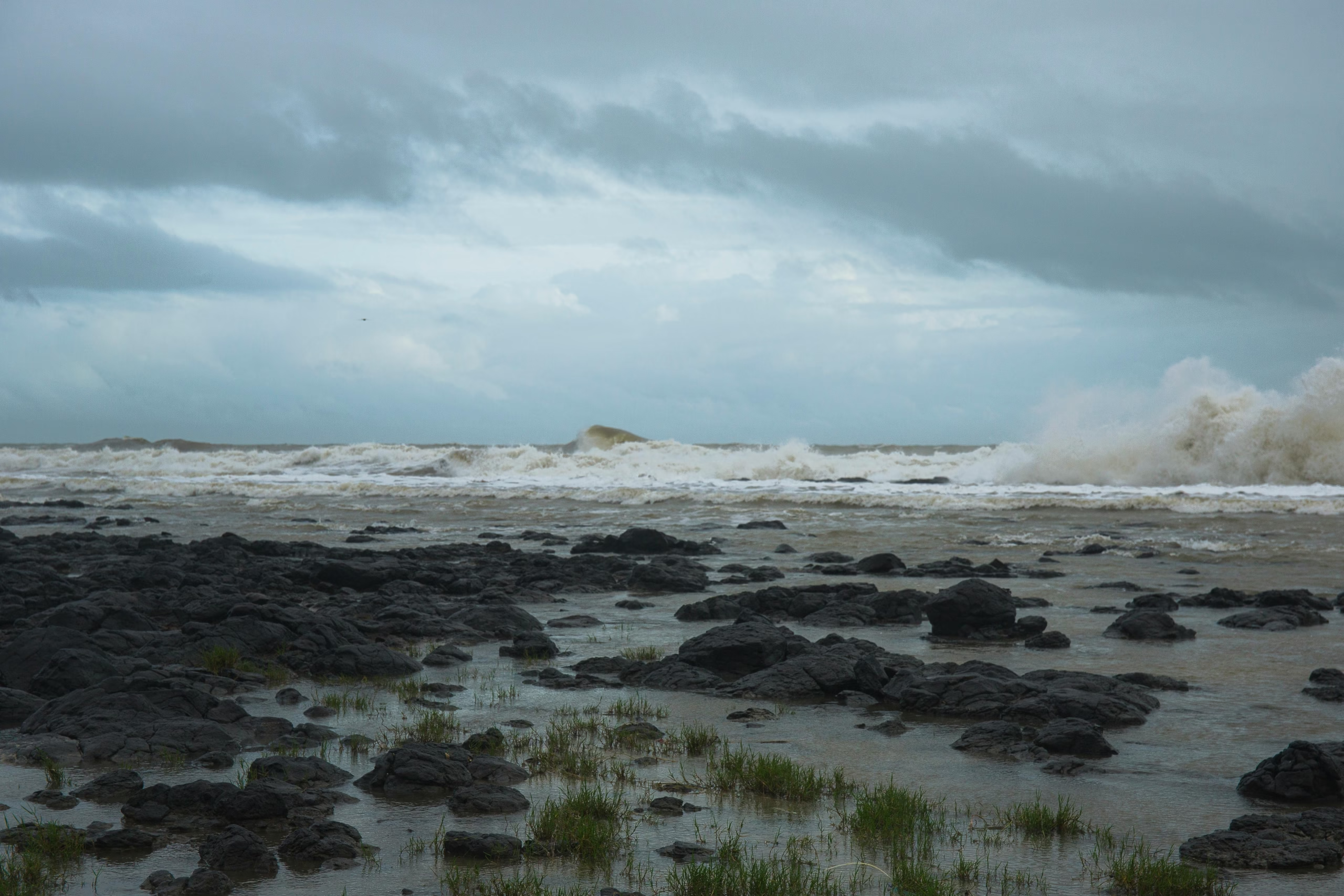
Delaware’s coastal communities from Fenwick Island to Lewes and Rehoboth Beach face increasing risks from storm surge, flooding, and sea-level rise. According to DNREC’s Flood Ready Delaware initiative, FEMA flood zones such as AE (elevated floodplain) and VE (velocity hazard with wave action) require stricter building standards. Meanwhile, the SR1 Coastal Corridor Resiliency Study highlights the vulnerability of critical infrastructure along Delaware’s shoreline.
For developers and contractors, estimating storm-resistant construction is more complex than standard projects. It requires specialized materials, engineering solutions, and compliance with FEMA flood zone designations. Accurate estimates ensure projects remain financially viable while safeguarding communities against future climate impacts.
Key Estimating Factors for Storm-Resistant Construction
| Factor | Challenge | Estimating Considerations |
|---|---|---|
| Elevated Foundations | Required in AE & VE flood zones | Budget for pilings, piers, or raised slabs |
| Flood-Resistant Materials | Saltwater and moisture damage | Use concrete, pressure-treated lumber, and corrosion-resistant steel |
| Structural Reinforcement | High winds and wave action | Include hurricane straps, shear walls, and impact-resistant windows |
| Compliance Costs | FEMA & DNREC permitting requirements | Add admin labor for floodplain permits, inspections, and documentation |
| Insurance & Risk | Higher premiums in flood zones | Factor in flood insurance costs and mitigation credits |
| Utility Placement | Risk of damage to mechanical systems | Estimate for elevated or rooftop HVAC, electrical, and plumbing |
| Resiliency Features | Long-term sustainability | Budget for permeable pavements, stormwater management, and backup power |
| Extended Timelines | Specialized construction methods | Add contingency for longer schedules and weather delays |
Step-by-Step Estimating Process
-
- Identify Flood Zone Classification – Determine if the site is in AE, VE, or X zones using FEMA flood maps.
-
- Foundation Design – Estimate costs for pilings, piers, or raised slabs to meet FEMA elevation requirements.
-
- Material Selection – Budget for moisture-resistant and corrosion-proof materials.
-
- Structural Reinforcement – Include hurricane straps, shear walls, and impact-resistant glazing.
-
- Utility Placement – Plan for elevated mechanical systems to avoid flood damage.
-
- Compliance & Permits – Add administrative labor for DNREC and FEMA permitting.
-
- Insurance & Incentives – Factor in flood insurance premiums and potential NFIP mitigation credits.
-
- Resiliency Features – Budget for stormwater management systems, backup generators, and permeable pavements.
Real-World Example: Fenwick Island Coastal Home
A builder estimating a 2,000 sq. ft. home in a VE flood zone:
-
- Added $85,000 for pilings and elevated foundation.
-
- Budgeted $40,000 for impact-resistant windows and reinforced roofing.
-
- Included $15,000 for elevated HVAC and electrical systems.
-
- Factored in $10,000 for compliance and permitting costs.
-
- Delivered a resilient home eligible for NFIP flood insurance discounts.
Why Accurate Estimating Matters
| Outcome | Benefit to Developers |
|---|---|
| Risk Reduction | Protects against storm surge and flooding |
| Compliance Assurance | Meets FEMA and DNREC floodplain requirements |
| Insurance Savings | Qualifies for NFIP mitigation credits and lower premiums |
| Client Confidence | Builds trust with homeowners in high-risk areas |
| Long-Term Value | Ensures durability and sustainability in coastal markets |
Additional Considerations
-
- Climate Adaptation Resources: DNREC provides training and FEMA offers manuals for resilient construction.
-
- Community Resilience: Projects contribute to Delaware’s broader resiliency goals, protecting infrastructure and housing.
-
- Hidden Costs: Coastal projects often reveal soil instability, saltwater corrosion, or drainage challenges, requiring contingency allowances.
-
- Future-Proofing: With sea-level rise projections, developers should plan for higher elevations and adaptive designs.
Final Thoughts
Storm-resistant construction in Delaware’s coastal flood zones requires precision, compliance, and foresight. By budgeting for elevated foundations, flood-resistant materials, reinforced structures, and resiliency features, developers can deliver projects that withstand storms and protect communities.
At MSB Estimating, we specialize in coastal construction estimates across Delaware, helping contractors align with FEMA flood zone standards, DNREC permitting, and long-term resiliency goals.
Need Help Estimating Coastal Projects?
Contact MSB Estimating today for accurate, storm-resistant construction estimates tailored to Delaware’s flood-prone regions.