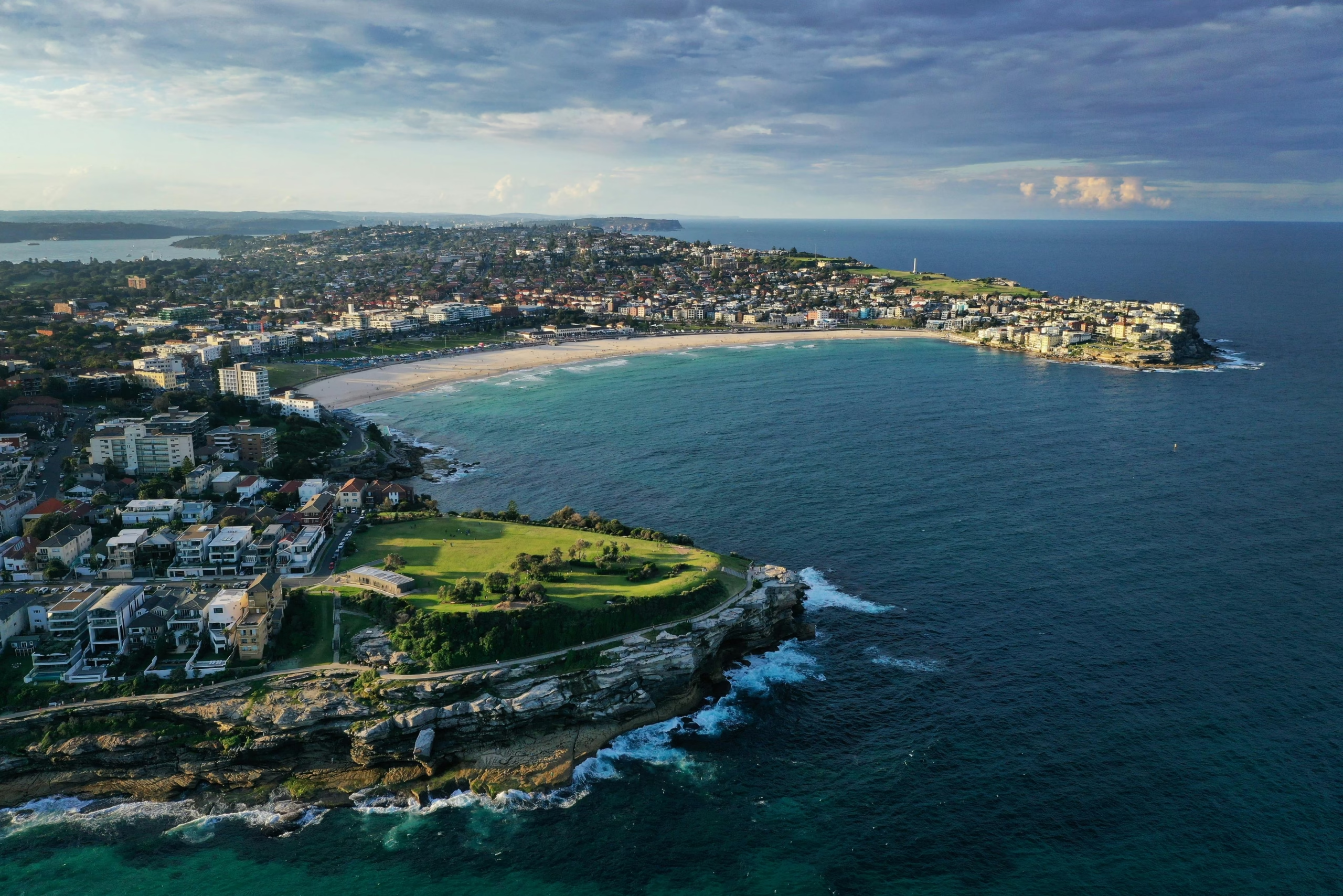
Connecticut’s shoreline communities including Mystic, Old Saybrook, Westport, Fairfield, and Branford are among the most desirable residential areas in New England. These towns offer breathtaking views of the Long Island Sound, but they also present unique construction challenges. Coastal homes must be built to withstand saltwater corrosion, high winds, flooding, and shifting soils.
Concrete is the backbone of coastal construction. It provides strength, durability, and protection against the elements. However, estimating concrete for these projects is not straightforward. Contractors must account for specialized mix designs, reinforcement strategies, site logistics, and strict compliance with local zoning and FEMA floodplain regulations. A well-prepared estimate ensures both structural resilience and cost efficiency.
Concrete Estimating Factors for Coastal Homes
| Factor | Coastal Challenge | Estimating Considerations |
|---|---|---|
| Foundation Design | Risk of erosion and flooding | Include deep footings, pilings, and reinforced slabs |
| Mix Durability | Saltwater exposure accelerates corrosion | Specify low-permeability, air-entrained, and sulfate-resistant mixes |
| Structural Reinforcement | High winds and storm surge loads | Add costs for heavy rebar, tie-downs, and shear walls |
| Decorative Finishes | Coastal homes demand aesthetic appeal | Estimate stamped patios, tinted driveways, and sealed walkways |
| Site Logistics | Narrow shoreline access and fragile ecosystems | Include pump trucks, staging, and erosion control measures |
| Compliance | FEMA floodplain and local zoning restrictions | Add admin labor for permits, inspections, and documentation |
| Climate Considerations | Freeze-thaw cycles and humidity affect curing | Budget for admixtures, extended curing, and protective coatings |
| Maintenance Allowances | Coastal concrete requires ongoing care | Estimate resealing, crack repair, and periodic inspections |
Step-by-Step Estimating Process
- Site Assessment – Survey soil stability, floodplain elevation, and erosion risks.
- Volume Calculation – Break down concrete needs for foundations, slabs, seawalls, patios, and driveways.
- Mix Specification – Use low-permeability concrete with supplementary cementitious materials (SCMs) like fly ash or slag to resist saltwater damage.
- Reinforcement Planning – Include heavy rebar, pilings, and hurricane-resistant anchoring systems.
- Logistics Planning – Budget for pump trucks, staging, and erosion control barriers.
- Compliance Costs – Add administrative labor for FEMA floodplain permits and local zoning approvals.
- Maintenance Forecasting – Estimate resealing, protective coatings, and periodic inspections for long-term durability.
Estimator’s Checklist
- Review FEMA floodplain maps and local zoning codes
- Calculate volumes for foundations, slabs, and seawalls
- Specify saltwater-resistant concrete mixes
- Add reinforcement for wind and surge loads
- Budget for site logistics and erosion control
- Include decorative finishes for coastal aesthetics
- Plan for ongoing maintenance allowances
Real-World Example: Old Saybrook Beachfront Home
A contractor building a luxury coastal home:
- Specified air-entrained, low-permeability concrete for foundations.
- Added reinforced pilings to resist erosion and storm surge.
- Budgeted $40,000 for site logistics including pump trucks and erosion control.
- Included decorative stamped concrete for patios and walkways.
- Delivered a durable, compliant project that blended resilience with aesthetics.
Why Accurate Estimating Matters
| Outcome | Benefit to Contractors |
|---|---|
| Resilience | Durable concrete withstands saltwater and storms |
| Compliance Assurance | Proper documentation passes FEMA and zoning inspections |
| Client Satisfaction | Decorative finishes meet coastal lifestyle expectations |
| Reduced Risk | Planning avoids erosion damage and structural failures |
| Competitive Advantage | Specialized coastal bids win more shoreline projects |
| Long-Term Durability | Maintenance allowances extend the life of coastal homes |
Additional Considerations for Connecticut’s Shoreline
- Environmental Impact: Coastal construction must minimize disruption to fragile ecosystems. Estimators should include erosion control measures and sustainable materials.
- Insurance Requirements: Many shoreline projects require compliance with insurance standards tied to FEMA flood zones. Accurate estimates reduce risk of non-compliance.
- Community Regulations: Towns like Westport and Fairfield often have strict design review boards. Estimators should budget for administrative labor tied to approvals.
- Future-Proofing: Rising sea levels and stronger storms mean coastal homes must be built with resilience in mind. Estimators should include allowances for higher-grade materials and reinforcements.
Final Thoughts
Estimating concrete for coastal homes in Connecticut’s shoreline communities requires precision, durability, and compliance with coastal regulations. By including saltwater-resistant mixes, reinforced foundations, site logistics, and maintenance allowances, contractors can deliver bids that ensure both resilience and beauty.
At MSB Estimating, we specialize in coastal concrete estimating for Connecticut projects. From luxury beachfront homes to seawall reinforcements, we provide CSI-formatted takeoffs tailored to shoreline challenges.
Need Help Estimating for Coastal Projects?
Contact MSB Estimating today to get accurate, coastal-ready concrete estimates for your next Connecticut shoreline project.