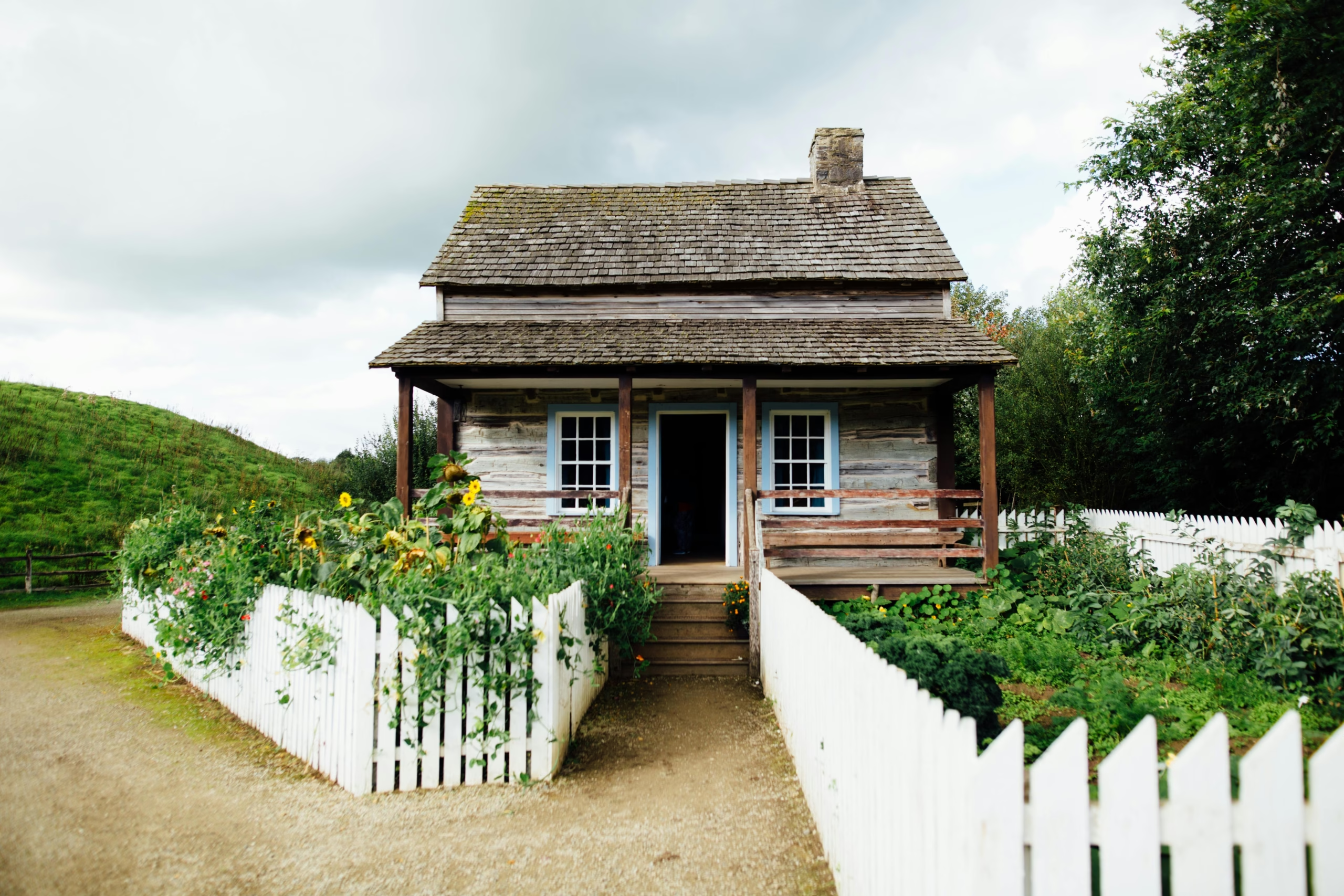
Connecticut’s architectural landscape is a living museum. From 17th-century colonial farmhouses to Victorian mansions and early 20th-century estates, these homes embody centuries of craftsmanship and cultural heritage. Renovating them is both an honor and a challenge.
Concrete, though not always part of the original construction, has become essential in preservation projects. It stabilizes old foundations, reinforces fragile structures, and provides durable finishes that blend seamlessly with historic aesthetics. But estimating concrete for these projects is far more complex than for modern builds. Contractors must balance preservation goals, structural safety, decorative authenticity, and compliance with local historic district regulations.
This guide explores the unique challenges of estimating concrete for Connecticut’s historic homes, with a detailed table of factors, step-by-step strategies, real-world examples, and best practices for success.
Concrete Estimating Factors for Historic Home Renovations
| Factor | Historic Renovation Challenge | Estimating Considerations |
|---|---|---|
| Foundation Stabilization | Old stone or brick foundations often deteriorated | Include underpinning, reinforced footings, and soil stabilization |
| Structural Retrofits | Fragile framing and uneven loads | Estimate reinforced slabs, piers, and wall supports |
| Decorative Finishes | Historic homes require period-appropriate aesthetics | Add costs for stamped, exposed aggregate, or tinted finishes |
| Mix Design | Must balance durability with compatibility | Specify low-shrinkage mixes and admixtures for old masonry |
| Site Access | Narrow lots and fragile structures limit equipment use | Include pump access, hand pours, and staging costs |
| Compliance | Local historic district guidelines restrict alterations | Add admin labor for permits, approvals, and inspections |
| Climate Considerations | Connecticut winters affect curing and scheduling | Budget for cold-weather admixtures and extended curing |
| Client Expectations | Owners want authenticity and durability | Provide mockups, samples, and maintenance allowances |
| Long-Term Maintenance | Historic homes require ongoing preservation | Estimate resealing, crack repair, and periodic inspections |
Step-by-Step Estimating Process
Step 1: Assess Existing Foundations
Historic homes often sit on stone or brick foundations that have weakened over centuries. Estimators must calculate additional concrete for underpinning, reinforced footings, and soil stabilization. This often involves hand excavation to avoid damaging fragile structures.
Step 2: Plan Structural Retrofits
Uneven loads and fragile framing demand reinforced slabs, piers, and wall supports. Specialized crews may be needed to carefully dismantle and rebuild without damaging historic elements. Estimators should include labor premiums for preservation-trained workers.
Step 3: Specify Decorative Finishes
Owners of historic homes often expect period-appropriate finishes. Concrete can be tinted, stamped, or exposed aggregate to replicate original aesthetics. These finishes require mockups, sample approvals, and specialized labor.
Step 4: Account for Site Access
Historic neighborhoods often have narrow streets and small lots, limiting heavy equipment. Estimators should include costs for pump trucks, hand pours, and staging areas. In some cases, manual transport of materials may be necessary.
Step 5: Include Compliance Costs
Historic districts in towns like Hartford, New Haven, and Mystic require permits and approvals. Add administrative labor for documentation, inspections, and coordination with preservation boards. Failure to comply can halt projects midstream.
Step 6: Plan for Climate Challenges
Connecticut’s cold winters slow curing and can damage fresh concrete. Include costs for cold-weather admixtures, heated enclosures, and extended schedules. Estimators should also plan for seasonal scheduling, avoiding peak freeze periods.
Step 7: Factor in Long-Term Maintenance
Historic homes require ongoing preservation. Estimators should include allowances for resealing, crack repair, and periodic inspections to ensure durability over decades.
Estimator’s Checklist
- Assess foundation condition and stabilization needs
- Calculate structural retrofits for uneven loads
- Include decorative finishes that match historic aesthetics
- Plan for site access restrictions in historic neighborhoods
- Add compliance labor for historic district permits and inspections
- Budget for cold-weather curing and scheduling delays
- Provide mockups and samples for client approval
- Include long-term maintenance allowances
Real-World Example: Colonial Home in Hartford
A contractor renovating a 200-year-old colonial home:
- Stabilized stone foundation with reinforced footings.
- Added 120 CY of concrete for underpinning and slab retrofits.
- Specified tinted concrete for period-appropriate finishes.
- Used pump trucks for narrow site access.
- Budgeted administrative labor for historic district approvals.
- Delivered a durable, compliant renovation that preserved historic character.
Why Accurate Estimating Matters
| Outcome | Benefit to Contractors |
|---|---|
| Preservation Success | Accurate estimates protect historic character |
| Reduced Risk | Planning avoids damage to fragile structures |
| Client Satisfaction | Decorative finishes meet owner expectations |
| Compliance Assurance | Proper documentation passes historic district inspections |
| Competitive Advantage | Specialized bids win more historic renovation projects |
| Long-Term Durability | Reinforced foundations extend the life of historic homes |
| Community Value | Preserved homes enhance Connecticut’s cultural heritage |
Final Thoughts
Estimating concrete for historic home renovations in Connecticut requires precision, preservation awareness, and compliance with local regulations. By including foundation stabilization, structural retrofits, decorative finishes, climate considerations, and long-term maintenance, contractors can deliver bids that honor history while ensuring durability.
At MSB Estimating, we specialize in concrete estimating for Connecticut’s historic homes. From colonial foundations to Victorian decorative finishes, we provide CSI-formatted takeoffs tailored to preservation projects.
Need Help Estimating for Historic Renovations?
Contact MSB Estimating today to get accurate, preservation-focused concrete estimates for your next Connecticut project.