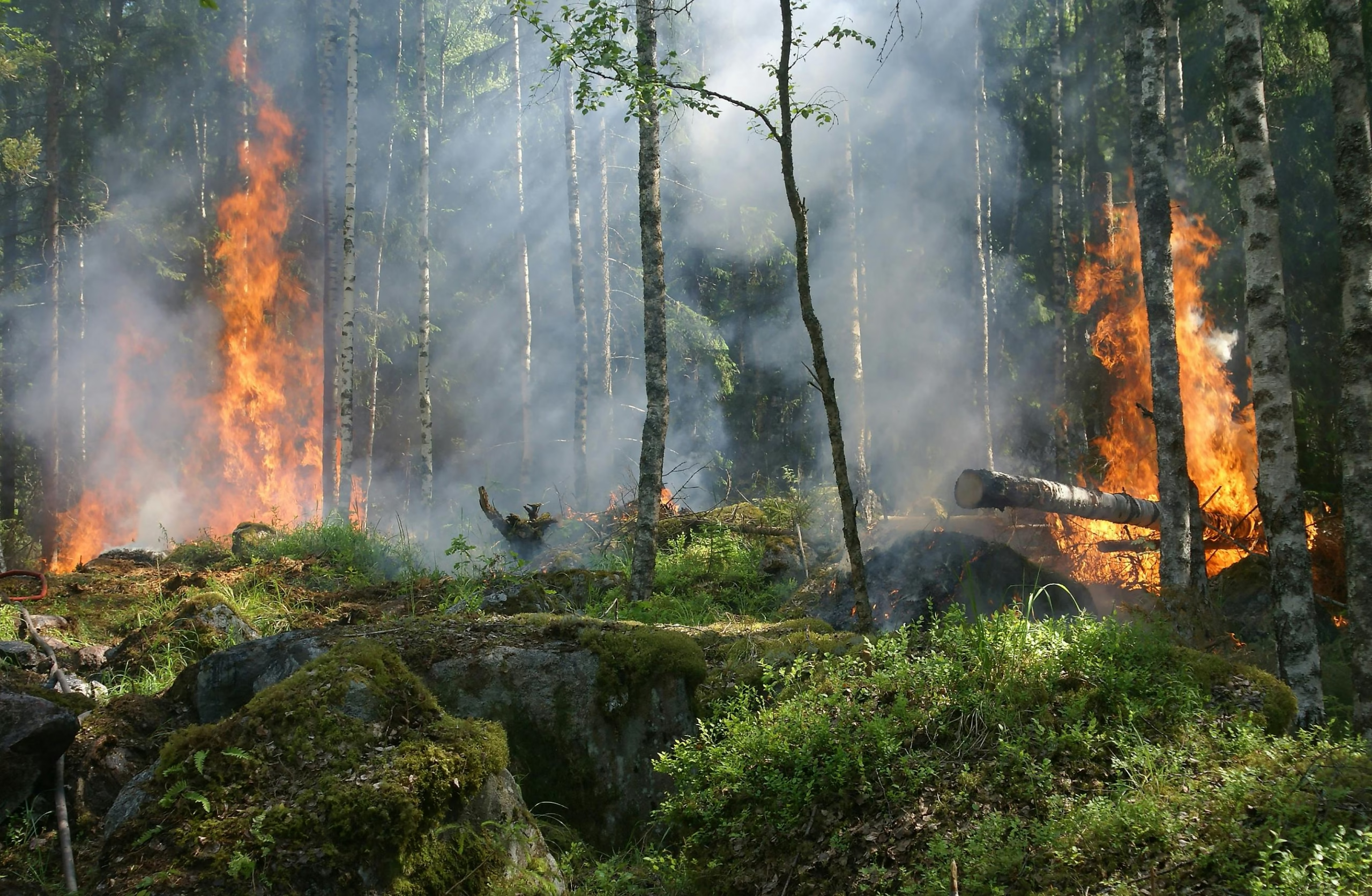
California’s wildfire crisis has reshaped the way homes are designed and built. With millions of acres burned annually and thousands of structures lost, homeowners and contractors in Very High Fire Hazard Severity Zones (VHFHSZ) face unique challenges.
Concrete has emerged as one of the most effective materials for wildfire-resistant construction. Unlike wood or other combustible materials, concrete resists ignition, maintains structural integrity under extreme heat, and provides long-term durability against fire, erosion, and seismic activity.
For contractors, estimating concrete in wildfire-prone areas requires a specialized approach. It’s not just about cubic yards it’s about fire-rated finishes, defensible space hardscapes, and compliance with Chapter 7A of the California Building Code. This guide explores how to estimate concrete for homes in California’s high-risk zones, with a detailed table of key factors and real-world examples.
Concrete Estimating Factors for Wildfire-Resistant Homes
| Factor | Wildfire-Resistant Requirement | Estimating Considerations |
|---|---|---|
| Foundation & Slabs | Non-combustible, reinforced concrete | Include fire-rated insulation and moisture barriers |
| Walls & Retaining Structures | Cast-in-place or ICF (Insulated Concrete Forms) walls | Estimate thicker walls, fire-rated finishes, and rebar cages |
| Roof Decks & Overhangs | Concrete or fire-resistant coverings | Add labor for slope, drainage, and fire-rated coatings |
| Finishes & Sealers | Fire-rated, low-VOC sealers | Include UV/fire-resistant coatings and reapplication costs |
| Defensible Space | Hardscape patios, driveways, and walkways | Estimate concrete flatwork for firebreaks around structures |
| Code Compliance | Must meet Chapter 7A and CAL FIRE standards | Add admin labor for documentation and inspections |
| Site Access | High-risk zones often have steep terrain | Include pump access, staging, and mobilization costs |
| Client Expectations | Long-term fire safety and durability | Provide mockups and samples of fire-rated finishes |
Step-by-Step Estimating Process
Step 1: Review Fire Hazard Maps and Codes
- Identify whether the project is in Very High Fire Hazard Severity Zones (VHFHSZ).
- Review Chapter 7A of the California Building Code and CAL FIRE guidelines for material compliance.
Step 2: Calculate Concrete Volume by Component
Break down by structural element:
- Foundations and slabs
- Cast-in-place or ICF walls
- Roof decks and overhangs
- Driveways, patios, and walkways (defensible space)
Include a 5–10% waste factor for overpour and site irregularities.
Step 3: Account for Reinforcement and Fire-Rated Materials
Wildfire-resistant homes often require:
- Thicker walls with rebar cages
- ICF systems for insulation and fire resistance
- Fire-rated coatings and finishes
Estimate costs for specialized materials and additional labor.
Step 4: Include Defensible Space Hardscapes
Concrete patios, driveways, and walkways act as firebreaks by reducing vegetation near the home.
- Estimate flatwork around the perimeter of the structure.
- Include decorative finishes that meet fire-resistance standards.
Step 5: Plan for Site Access and Logistics
High-risk zones often mean hillside or rural terrain.
- Add costs for pump trucks, cranes, or staged pours.
- Include mobilization and traffic control if required.
Step 6: Add Compliance and Documentation Costs
Wildfire-resistant construction requires extensive paperwork.
- Include labor for Chapter 7A submittals.
- Add costs for CAL FIRE inspections and HOA approvals.
- Document all fire-rated materials and finishes.
Wildfire-Resistant Estimating Checklist
- Review fire hazard maps and building code requirements
- Calculate volume for foundations, walls, and hardscapes
- Include fire-rated finishes, sealers, and coatings
- Estimate defensible space concrete flatwork
- Plan for site access in steep terrain
- Add compliance labor for CAL FIRE and Chapter 7A documentation
- Format estimate using CSI Division 03 standards
- Provide mockups and samples for client approval
Real-World Example: Estimating a Home in Napa County
A contractor bidding on a 4,500 sq ft hillside home:
- Specified ICF walls with fire-rated finishes.
- Calculated 650 CY of concrete for foundations, walls, and patios.
- Included UV/fire-resistant sealers for exposed surfaces.
- Added concrete driveways and walkways as defensible space.
- Planned for pump access due to steep terrain.
- Submitted a CSI-formatted estimate with Chapter 7A compliance notes.
- Won the bid and passed CAL FIRE inspections with zero rework.
Why Wildfire-Resistant Estimating Matters
| Outcome | Benefit to Contractors |
|---|---|
| Reduced Risk of Loss | Non-combustible concrete reduces ignition risk |
| Improved Client Safety | Defensible space and fire-rated finishes protect homes |
| Compliance Assurance | Meeting Chapter 7A avoids penalties and inspection failures |
| Competitive Advantage | Specialized wildfire-resistant bids win more work in high-risk zones |
| Long-Term Durability | Concrete structures withstand fire, erosion, and seismic activity |
| Community Resilience | Fire-safe homes reduce rebuilding costs after disasters |
Final Thoughts
Estimating concrete for wildfire-resistant homes in California’s high-risk zones requires precision, compliance, and foresight. By including non-combustible materials, defensible space hardscapes, and fire-rated finishes, contractors can deliver bids that protect both property and lives.
At MSB Estimating, we specialize in climate-smart concrete estimating for California’s wildfire-prone regions. From hillside estates to rural communities, we provide CSI-formatted takeoffs that align with Chapter 7A and CAL FIRE standards.
Need Help Estimating for Wildfire-Resistant Homes?
Contact MSB Estimating today to get accurate, fire-safe concrete estimates for your next California project.