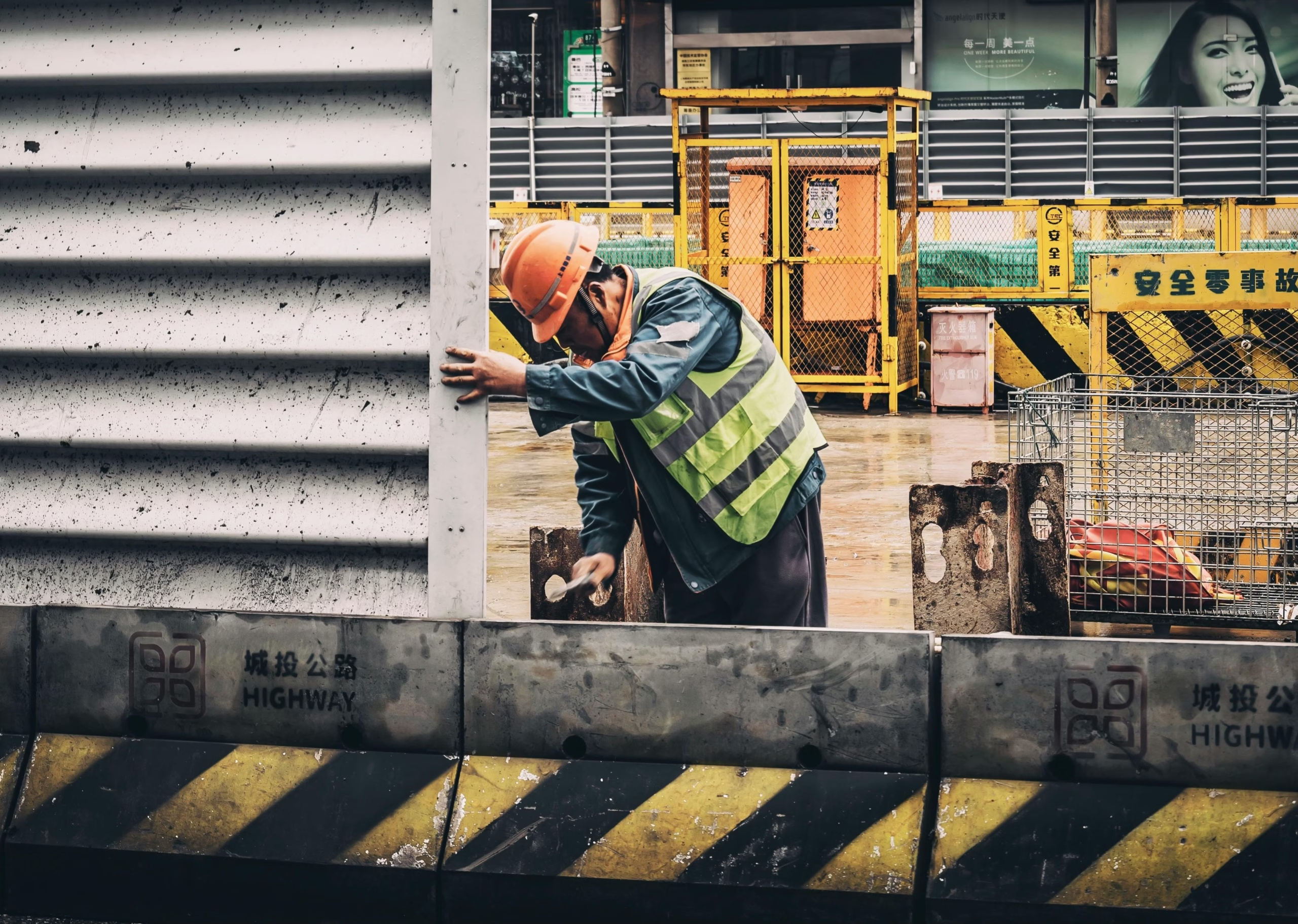
California’s transportation network is one of the busiest and most complex in the United States. From the Golden Gate Bridge to the I-5 freeway, concrete is the backbone of the state’s infrastructure. Every bridge deck, retaining wall, and highway pavement must meet Caltrans (California Department of Transportation) standards to ensure safety, durability, and compliance with federal funding requirements.
For contractors and estimators, this means that every bid must not only be accurate but also specification-ready. Unlike private projects, Caltrans jobs demand rigorous documentation, strict material sourcing, and detailed testing protocols. Missing these requirements in your estimate can lead to rejected bids, costly overruns, or penalties for non-compliance.
This guide provides a step-by-step breakdown of how to estimate concrete for California bridge and highway projects, explains key Caltrans standards, and offers practical strategies to help contractors deliver competitive, compliant bids.
Key Caltrans Standards for Concrete Estimating
| Estimating Component | Caltrans Specification Highlights | Estimating Considerations |
|---|---|---|
| Mix Design | Section 90: Must meet Caltrans-approved proportions | Include submittal prep, lab approval, and admixture costs |
| Cement Content | Minimum cementitious material per CY (varies by class) | Adjust for higher cement loads and admixtures |
| Aggregate Sourcing | Must be from Caltrans-approved suppliers | Add transport costs from approved quarries |
| Water-Cement Ratio | Max 0.45 for bridge decks; stricter for structural concrete | Use low w/c ratio mixes; include retarder for hot weather |
| Testing Requirements | Slump, air, temperature, cylinders per ASTM C31/C39 | Add field technician labor, lab fees, and reporting |
| Curing Methods | Wet curing or membrane-forming compounds per Section 90 | Include curing compound, burlap, water spray systems |
| Formwork and Finish | Must meet dimensional tolerances and finish specs | Estimate for formwork reuse, patching, and Class 1 finish |
| Documentation | Daily reports, batch tickets, inspector sign-offs | Include admin labor and compliance software |
Step-by-Step Estimating Process
Step 1: Review Caltrans Project Documents
Every Caltrans project begins with a bid package that includes:
-
- Standard Specifications (latest edition)
-
- Special Provisions (project-specific requirements)
-
- Approved Products List (APL)
-
- Structural drawings and bid item codes
Tip: Always cross-check bid items with Caltrans’ measurement and payment sections to avoid scope gaps.
Step 2: Calculate Concrete Volume
Break down by structural component:
-
- Bridge decks and approach slabs
-
- Abutments and piers
-
- Retaining walls and culverts
-
- Barriers, parapets, and flatwork
Include:
-
- Waste factor (5–10%) for overpour and formwork loss
-
- Separate line items for Class S, B, AA, and rapid-strength concrete
Step 3: Include Mix Design and Testing Costs
Caltrans requires:
-
- Pre-approved mix designs submitted by certified labs
-
- Field testing for slump, air content, and temperature
-
- Cylinder breaks at 7, 14, and 28 days
Estimate:
-
- Mix submittal preparation and approval time
-
- Field technician labor and equipment
-
- Lab fees and reporting costs
-
- Coordination with Caltrans inspectors
Step 4: Account for Formwork, Reinforcement, and Finishing
Formwork and reinforcement are major cost drivers:
-
- Surface area for formwork and reuse cycles
-
- Rebar takeoffs per Caltrans bar lists
-
- Surface finish requirements (Class 1 finish for bridge decks)
-
- Patching, grinding, and surface protection
Tip: Architectural finishes (e.g., textured barriers) require mockups and additional labor — include them in your estimate.
Step 5: Add Curing and Protection Measures
California’s climate varies from coastal fog to desert heat. Caltrans requires:
-
- Wet curing (minimum 7 days for structural concrete)
-
- Membrane-forming curing compounds
-
- Protective coverings for exposed surfaces
Include:
-
- Curing compound material cost
-
- Labor for application and monitoring
-
- Water spray systems or wet burlap
-
- Contingency for weather delays
Step 6: Estimate Documentation and Compliance Labor
Caltrans projects demand extensive paperwork:
-
- Daily quantity reports and inspector sign-offs
-
- Batch ticket collection and verification
-
- Subcontractor approvals and material certifications
-
- Pay estimate tracking and change order documentation
Tip: Allocate admin labor and software tools for compliance. This is often overlooked but critical for DOT projects.
Step 7: Format Estimate Using Caltrans Bid Items
Caltrans uses standardized bid item codes and units of measure. Be sure to:
-
- Match each scope item to its corresponding bid code
-
- Use correct units (CY, SF, LF)
-
- Include mobilization, traffic control, and environmental protection if required
-
- Format estimate for easy integration into DOT bidding platforms
California DOT Estimating Checklist
-
- Review Caltrans Standard Specs and project-specific provisions
-
- Calculate volume by component and class of concrete
-
- Include mix design submittal and testing costs
-
- Estimate formwork, reinforcement, and finishing labor
-
- Add curing compound and surface protection materials
-
- Include documentation and compliance labor
-
- Format estimate using Caltrans bid item codes and units
-
- Document assumptions, exclusions, and supplier sources
-
- Coordinate with approved labs and material suppliers
-
- Build contingency for weather, access, and inspection delays
Real-World Example: Estimating a Highway Bridge in Los Angeles County
A contractor bidding on a Caltrans-funded bridge replacement project:
-
- Reviewed specs for Class AA concrete with max w/c ratio of 0.40
-
- Calculated deck volume: 1,200 CY with 7-day wet curing
-
- Included mix submittal, slump and air testing, and cylinder breaks
-
- Estimated formwork surface area and Class 1 finish labor
-
- Added curing compound, burlap, and water spray system
-
- Included admin labor for daily reports and batch ticket tracking
-
- Submitted a bid aligned with Caltrans pay item codes and won the project
Why Caltrans-Aligned Estimating Matters
| Outcome | Benefit to Contractors |
|---|---|
| Fewer Compliance Issues | Aligning with Caltrans specs reduces risk of rejected work |
| Improved Profit Margins | Accurate forecasting prevents overruns and change orders |
| Stronger Public Sector Relationships | Professional estimates build trust with Caltrans and municipalities |
| Better Scheduling | Planning for testing and curing improves delivery timelines |
| More Competitive Bids | DOT-formatted estimates win more infrastructure work |
| Reduced Risk | Compliance protects against penalties and rework |
Final Thoughts
Estimating concrete for California bridge and highway projects requires precision, compliance, and foresight. By aligning your estimates with Caltrans standards from mix design and curing to documentation and testing you can deliver bids that are accurate, competitive, and inspection-ready.
At MSB Estimating, we specialize in DOT-aligned concrete estimating for California infrastructure projects. From bridges and highways to culverts and retaining walls, we provide CSI-formatted takeoffs and compliance-ready estimates tailored to Caltrans requirements.
Need Help Estimating for Caltrans Projects?
Contact MSB Estimating today to get accurate, specification-compliant concrete estimates for your next California infrastructure bid.